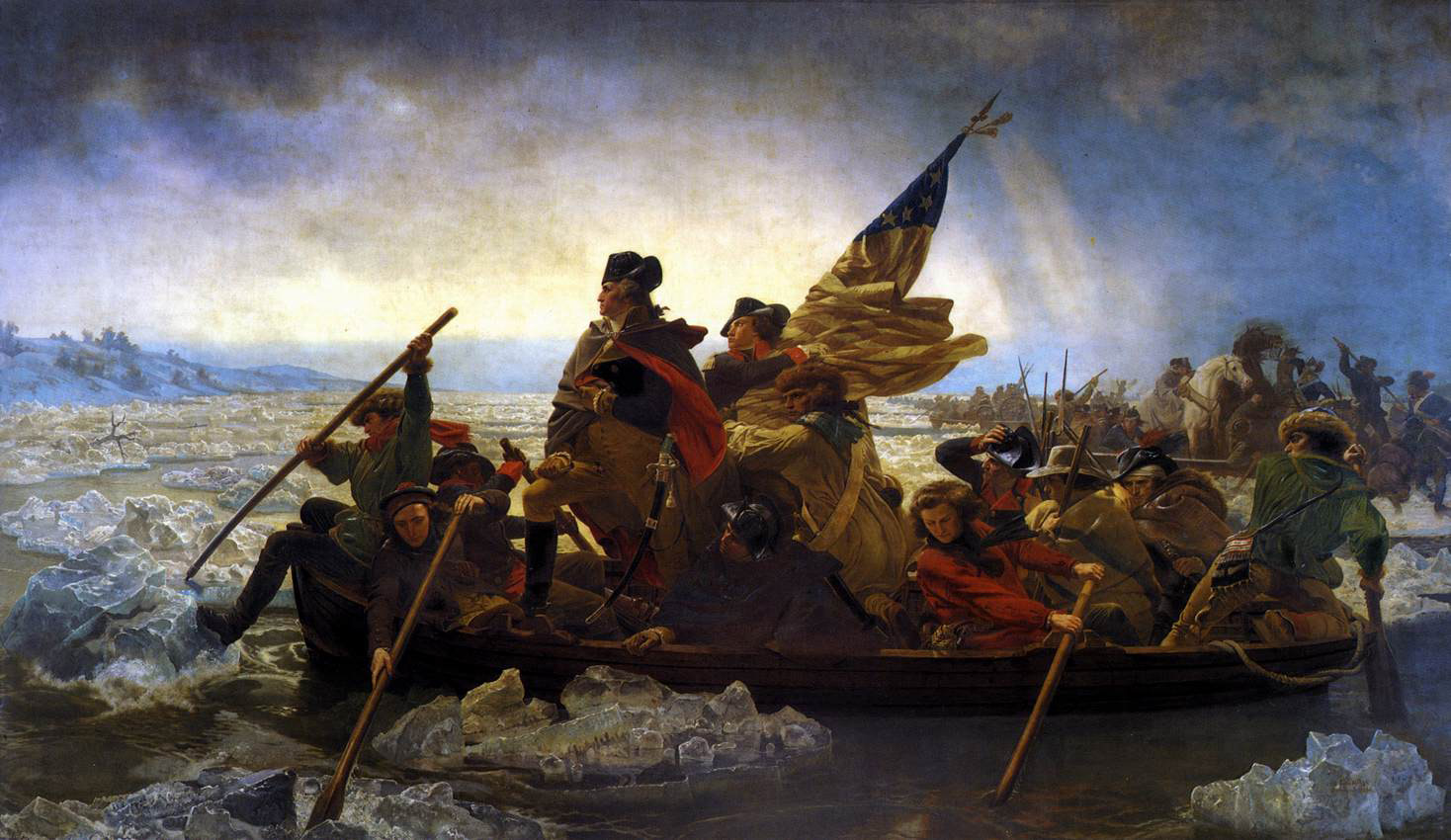
Hemingway’s “The Old Man and the Sea.” Pride goeth before a fish. Lions have small hearts and little stamina.

Hemingway’s The Old Man and the Sea.

Pride goeth before a fish.

Lions have small hearts and little stamina.


Burton Weltman


School Days/School Daze: The wiseacre kid has a point.

A discussion of Ernest Hemingway’s The Old Man and the Sea is in progress in a class of high school sophomores.  The teacher is discoursing on the meaning of the novelette.  Most of the students are bored stiff, others are feverishly taking notes. This stuff may be on the test.  One kid is lounging in the back of the room with his hand raised.  The teacher is studiously ignoring him.

The Old Man and the Sea was first published in 1952.  Over the years, it has become a widely assigned book in middle and high school literature classes.  It is a famous book and won a Pulitzer Prize.  It was also cited when Hemingway won the Nobel Prize for literature shortly after its publication.  It is a short and easy read, and it is full of potentially interesting things to discuss.  Assigning the book is a way of connecting young adult readers with one of the great writers of the twentieth century without requiring too much effort from them.

The story is about the struggles of an old and impoverished fisherman from a small Cuban village.  It seemingly takes place in 1949, as the old man, who is an avid baseball fan, mentions that Joe DiMaggio, the great New York Yankee outfielder, is injured with bone spurs, and DiMaggio suffered that injury in 1949.  As the story opens, the old man has gone eighty-four days without catching a big fish and is being shunned by some of his neighbors as a purveyor of bad luck.  The old man has apparently been a loner for most of his life, but has taken on a young assistant in recent years to help him fish in his old age.  But now the parents of his assistant have banned the boy from fishing with him for fear the boy might catch the old man’s bad luck.

The book’s opening line is “He was an old man who fished alone,” thereby highlighting the old man’s isolation.  The old man’s name is Santiago but the third person narrator of the story consistently refers to him as “the old man,” which also highlights his alienation. The old man fishes in a skiff, a small boat with oars and a sail.  The boat can be handled by one person but the other fishermen in the book seem to go out in their skiffs in groups of two or three, as had the old man with his young assistant before his shunning.  The old man is on his own and is desperate.

In his desperation to catch a big fish, the old man decides to sail farther out from the coast than he and the other fishermen have ever gone.  After most of a day of frustration, he finally hooks a huge marlin but cannot bring in the fish all by himself.  The marlin, hooked but still game and very strong, drags the skiff farther and farther away from the coast, with the old man hanging on for dear life.  This goes on for three grueling days until the fish finally tires and the old man is able to kill it with a harpoon.  The marlin is bigger than the old man’s boat so he has to tie it to the side of the skiff, leaving the fish to float in the water as they sail back to the shore in tandem.

The old man sets sail for home with what he celebrates as a glorious prize that will make him a lot of money and very famous.  But, no sooner does he start for home than sharks begin to attack the fish.  The old man furiously fights and kills many of the sharks, but it takes him a day to get back to shore and the marlin is completely devoured by sharks before he can get it home.  He arrives with a huge fish skeleton attached to his boat, much to the marvel of the villagers, but with nothing to sell in the market.

In the course of landing the fish and then trying to bring it back home, the old man suffers enormously from the elements, lack of food and water, lack of sleep, and injuries he sustains while fighting first with the marlin and then with the sharks.  The book contains extremely detailed descriptions of the sailing and fishing methods and the skills of the old man.  Hemingway is adept at making a riveting and moving adventure story out of complicated technical information about sailing and fishing.

Hemingway is also able to describe well and with great empathy the suffering of the old man, whose mental and physical endurance are remarkable.  But the old man suffers lapses in both.  In the course of struggling to land the marlin, for example, the old man comes to regard the fish as simultaneously his brother and his nemesis, and he talks to the fish as though the fish is his companion.  He sporadically realizes that he is becoming delusional, but can’t stop himself.

When the old man finally reaches home, he goes almost straight to sleep.  And that is how the book ends, with the old man having a recurring dream about a group of lions he had apparently once seen on a beach in Africa when he was a young sailor working on commercial vessels.  The last line is “The Old Man was dreaming about lions.”  He loves those lions, and throughout the story he repeatedly thinks and dreams about them, and wonders “Why are they the main thing that is left?” in his memories of his life.[1]

The Old Man and the Sea tells a simple story, but that does not mean its interpretation should be simple.  Immediately upon its publication, however, the book was saddled by influential reviewers with a simplistic interpretation describing it as a paean to heroic individualism. In this view, the old man triumphs over a hostile natural and social environment, bagging his fish even though he cannot bring it home.  He is a winner in his solitary struggle for self-respect against nature and his fellow men. And the book holds his individualism up as a model for humanity.[2] This view has over the years become fixed as the conventional interpretation of the book.

A recent reviewer, for example, referring to the old man’s perseverance in fighting the marlin and the sharks, and to his reveries about lions, has characterized the old man as a dreamer.  “A world without dreamers would be a nightmare,” this reviewer claims, and concludes that the moral of the story for readers is to persevere in their dreams, no matter what the obstacles or what other people say.[3]

Another recent reviewer similarly sees the moral of the story as “Heroism is possible in even the most mundane circumstances.”  That is, even a lowly fisherman can be a hero and we, who are most likely mundane people, should take a lesson in heroism from the old man.[4]  Placing a seal of establishment approval on this conventional interpretation, the Encyclopedia Britannica describes the book as a “heroic novel” about man proving himself through “overcoming the challenges of nature.”  The encyclopedia concludes that the story illustrates “The ability of the human spirit to endure hardship and suffering in order to win.”[5]

The underlying theme of conventional interpretations of the book is that the old man is a winner in his struggles with the fish, his environment, his society, and himself, and he is extolled as a heroic model for us to emulate.  This interpretation is the gist of the teacher’s discourse to the class.  When the teacher finishes, the student in the back is finally recognized by the teacher and the kid proceeds to proclaim that in his opinion the old man was an idiot who ended up with nothing, which is what was coming to him.  The teacher coolly rejects the student’s claim, in a tone that suggests this is the sort of wiseacre comment one would expect from this kid.  But is the kid wrong?  I think not, and I think it matters.

Conventional Interpretations: Doing a disservice to our students.

I have two main objections to the conventional interpretation of The Old Man and the Sea.  The first is that it confounds the differences between individualism and individuality.  Individualism essentially consists of doing your own thing, of, by and for yourself, irrespective of any relation with others.  Individuality essentially consists of finding your own voice and place within a group, and to make your own individual contribution to the collective effort.  The conventional interpretation describes the moral of the story as promoting individualism, whereas I think it promotes individuality.

The second problem I have with the conventional interpretation is that it misconstrues the form of the book.  There are many ways in which literary works can be characterized and categorized.  One way, which dates back to Aristotle and the ancient Greeks, is to distinguish between melodramas, tragedies, and comedies.  Melodrama can be described as a story of good against bad, good guys against bad guys, for example, or a good person battling against hostile circumstances.

Tragedy can be defined as a story of too much of a good thing becoming bad.  Tragedy involves a character who pursues a too narrowly prescribed good too far until it turns on itself, becomes bad and precipitates disaster.  The character’s tragic flaw is pride and a lack of perspective, the failure to see things in a broader context beyond his own narrow vision.  Tragedy is a story of hubris versus humility, the failure of the tragic character to recognize his personal limits.

Comedy is generally defined as a story of wisdom versus folly, for example, wise people versus foolish people or a well-intentioned person doing something stupid.  A comedy need not be funny.  It is the stupidity of the fools that makes it comic.[6]

The lines between melodrama, tragedy, and comedy are not hard and fast, and the story forms overlap in many respects.  Each, for example, can contain elements of stupidity, conflict, violence, and pride, and each can have an unhappy ending.  Too much of one element can transform one story form into another.  Conventional interpretations describe The Old Man and the Sea as either a melodrama or a tragedy, or some combination of the two.  I think it is better read as a comedy.

Following the conventional interpretation, educational websites devoted to guiding students and teachers toward understanding the book all take the view that the story promotes individualism and takes the form of a melodrama, tragedy or combination of the two.  I think that this is a mistake and that it does a disservice to the story and to our students.

Typifying these academic helpmeets, the website Sparknotes.com describes the story in melodramatic terms as portraying “Heroism in struggle.”  According to this website, the novel describes a kill-or-be-killed world in which each man must heroically fight for his livelihood and life.  Pride may tragically lead a person to go too far, as it did when it led the old man to sail too far from shore, but pride is the “source of greatest determination” in men.  Without pride, men are losers.  The moral of the story, according to Sparknotes, is contained in a pep talk the old man gave to himself when he said that “Man is not made for defeat” and that a man may be “destroyed but not defeated.”  Sparknotes concludes that the story teaches us that men must follow their pride and never admit defeat.[7]

In a similar blog addressed to school teachers and students entitled “What lessons we can learn from The Old Man and the Sea,” the writer claims the moral of the story is that “Perseverance is a universal law.”  This blogger claims the book teaches us the virtues of individualism and going it alone.  Focusing on the shunning of the old man by the villagers, the blog concludes that the lesson of the book is that each of us must individually fight our own battles no matter whether or not other people support us.[8]  Study.com, another website for students and teachers, similarly claims that a combination of hope and pride may have led the old man to go too far in search of a fish, but the marlin symbolizes redemption for him even though he loses it.[9]

Many of these study guides for students and teachers focus on the old man’s preoccupation with lions.  They invariably claim that this preoccupation symbolizes the heroic perseverance and individualism that the old man exhibits.  Litcharts.com claims, for example, that the lions represent the “rejuvenation” of the old man and the return of his pride.  Pride may be a tragic flaw, the website acknowledges, but it is a virtue as well as a vice because it spurs the hero to action.  Symbolically, according to this website, “a group of lions is called a ‘pride.’”[10]

Shmoop.com, yet another website for persevering students, also claims that lions are persevering predators who symbolize the perseverance of the old man. The old man, this website insists, identifies with lions and they inspire his perseverance.[11]  Finally, enotes.com, whose author advertises himself as “a certified educator,” claims that the lions represent the old man’s vitality and “his victory over village prejudice.”  According to this educator, the lesson of the book for young students is to go their own ways no matter what others say.[12]

Echoing the conventional interpretation of the book, the common theme of all these educational websites is that the old man is a winner even though he ends up empty handed, seriously injured, and completely wiped out.  And the websites all claim that the book promotes the old man’s actions as a model of individualistic heroism for readers of the book.  I don’t agree.  I think these educators have misread the book and missed the boat and, speaking as a former teacher and former professor of education, I think they are doing a disservice to students.

Prides Foolish, Tragic, and Leonine: Getting things straight.

Pace the conventional interpretation, I agree with the wiseacre kid’s take on the book.  And I think his reaction reflects that of most students when they read it, which is that the old man is portrayed in the story as a fool.  It was my reaction when I first read the book some sixty years ago.  And I think the reaction of most people would be that the old man should not be fishing alone, should not have gone out as far from shore as he did, and should not have continued fighting the marlin and then the sharks, but should have cut loose the fish rather than fight him to the end and the sharks thereafter.  And, most significantly, the old man acknowledges all of this in the course of the book.

The old man repeatedly mourns that he does not have someone else with him in the boat. “I wish I had the boy,” he recites over and over.[13]  He frequently berates himself for having forgotten to bring some necessary piece of equipment. “You should have brought many things, he thought. But you did not bring them, old man.”[14]  He admits in the end that he has been defeated and is a loser.[15]  “They truly beat me,” he acknowledges.[16]  And he blames his disastrous loss on his own foolish pride.[17]  “You violated your luck when you went too far outside,” he complains to himself.[18]  So, the wise guy reaction is the old man’s own reaction, and the conventional interpreters and teachers have got him wrong.

I think the book is best described in literary terms as a comedy since even the old man denominates himself a fool.  That does not mean we are supposed to mock or reject the old man.  He is someone with whom we are intended to identify and empathize based on our own sometimes foolish pride and risky inclinations, but he is not someone whose behavior we should emulate or promote as a role model for young people.  Rather than a paean to individualism and individual heroism, the book is an argument against individualism and an argument in favor of cooperation.  And the old man’s fixation on lions supports this conclusion.

Contrary to the way lions are mistakenly described in conventional interpretations of the book, lions are widely known for hunting in groups rather than alone, and for lacking stamina and perseverance.  Lions are the only cats who live and hunt together in groups rather than individually.  And it’s a good thing for them that they do because they have small hearts and lack stamina.  They can run fifty miles per hour for a few hundred yards, but then they are finished and give up.  If a gazelle gets a head start on a lion, it is home free.  If lions didn’t help each other with hunting, by surrounding an animal so that it can’t get away, they would starve.

These are facts of leonine life that a big game hunter like Hemingway would surely have known, and these facts completely undermine the conventional interpretation of the lions in the book.  It is also the case that a “pride” is a group of female lions, and it is the females who generally do the hunting for the larger group of male and female lions.  A group of male lions is called a “coalition.”  Using the word “pride” to characterize the old man is, therefore, not, as conventional interpretations claim, a macho masculine reference to male lions.  In any case, the old man thinks and dreams of groups of lions who are playing together, not solitary individual lions.  His preoccupation with lions seems, therefore, to be a dream in favor of collective life, not individualism.

The conventional interpretation also misreads the book in describing the story as a struggle of man against nature as though nature is the enemy of man and the old man must wage war against nature.  But neither the narrator in the book nor the old man describes things in those terms.  The old man and his fellow fishermen are, instead, portrayed as links in the natural chain, in the circle of life as it is popularly described in the musical “The Lion King.”  Nature is the fishermen’s element, not their enemy.[19]  When some of his neighbors shun the old man, they are essentially saying that he is a weak link in the chain and they don’t want him to break it for them altogether.  They still care about him and take care of him, but they need to protect the community.

It is the old man who declares war against nature, not vice versa.  When he decides to sail farther out than he naturally would, and then battles a fish and a pack of sharks that are too much for him, the old man undertakes an unnatural act.  It is a proudful act that takes him out of the natural chain of things, as he later admits.  In the natural chain, big fish catch and eat little fish, and people catch and eat big fish.  That is in the nature of things.  It is a struggle, but an ordinary course of business.  The old man declared war on nature where none naturally existed.

The old man compounds this misstep by anthropomorphizing the marlin and characterizing their struggle as a battle of egos and wills.  Speaking of the marlin, he says “I will show him what a man can do and what a man can endure.”[20] The old man treats the fish as though it is a self-conscious competitor, like Ahab chasing after Moby Dick, rather than merely a fish looking to eat other fish and survive.  Speaking to the fish, the old man says “Fish, he said, I love and respect you very much.  But I will kill you dead before the day ends.”[21]  Commenting on the unnatural implications of this statement, one reviewer has asked “Is killing what you love a tenable position?”[22]   In his foolish pride, the old man has left even his human nature behind.

Another crucial mistake that conventional interpreters make is to take things the old man says in the midst of his difficulties as being the old man’s and the book’s final conclusions about things.  When the old man says that a man can never be defeated and other proudful things in the course of his struggles, he is trying to egg himself on to keep up the fight.  And it works.  He fights his way through to the end of his Quixotic voyage, exhibiting a perseverance no lion could.

But then the old man reflects further on what he is doing and has done, and he comes to conclusions opposite to what he was saying before.  Finally, he collapses and dreams of lions playing on the beach.  Not a heroic ending and not a self-styled hero.  Just a fisherman who foolishly got carried away with himself and with a fish.  And in his last conversations with the boy before he nods off to sleep, he says that he is never going to do anything so foolish again.

The Moral of the Story and the Story of the Story.

I think the moral of the story of The Old Man and the Sea consists of a plea for cooperation, pragmatism and humility. The old man’s redemption is not in catching the fish as some conventional interpreters hold but in ultimately recognizing that he is a person who needs people, as the popular song goes.  Not individualism but collectivism, and not pride but humility, is the moral.  “I missed you,” the old man admits to the boy just before he falls asleep at the end.[23]

This moral is consistent with other of Hemingway’s writings, such as his most famous book For Whom the Bell Tolls. That book takes its title and its main theme from a poem by John Donne that asserts “no man is an island,” that all people are interconnected, and that one person’s life is everyone’s life, one person’s death everyone’s death.  Hemingway is known for his macho heroes but like Robert Jordan, the hero of For Whom the Bell Tolls, they generally fight for the common good alongside common people.  The old man learns this lesson in the book.

So, how could it be that The Old Man and the Sea has been so widely misinterpreted for so long?  And how can it be that teachers routinely override a critical reading of the book by students so as to make studying the book an indoctrination in an individualistic ideology that the story doesn’t support?  I think the original misinterpretation was a product of the times in which the book was first published, and it was then carried forward by intellectual and educational inertia.

The book was published in 1952, shortly after the United States had come out of the fight against totalitarian Nazism and fascism in World War II, and when the country was engaged in a burgeoning Cold War against the collectivist Soviet Union and Red Scare against domestic Communists.  Fears of totalitarian collectivism and mindless conformity were widespread on both the anti-socialist political right and the anti-Communist political left.  Concerns that the United States was becoming a mass society in which politicians, corporations and the mass media were promoting mind control and mediocrity for political and commercial ends pervaded the political spectrum.

These concerns were typified by the popularity among conservatives of Ayn Rand’s book (1943) and movie (1949) Fountainhead which extolled individualism and excoriated collectivism.  Among liberals, The Lonely Crowd (1951) by David Reisman and others was a widely praised sociological study of conformity, focusing on the transition of Americans from being “inner-directed” by their consciences to being “other-directed” by the need to conform.  Among socialists, The Authoritarian Personality (1950) by Theodor Adorno and others was a highly regarded sociological study of the susceptibility of people, and Americans in particular, to demagogues and dictators.  On all sides of the literary political spectrum, intellectuals were looking to save the individual from being swallowed up in a mass society.

Bur there are significant political differences between individualism and individuality.  Individuality is a pro-social attitude promoted by most liberals and socialists.  Society for them is a caring community in the nature of a family.  Individualism is an anti-social attitude promoted by most conservatives.  Society for them is just a collection of individuals who are connected mainly by contracts. What happened with the interpretation of The Old Man and the Sea is just a small example of what happened to American culture during the Cold War.  Conservatives grabbed the upper hand and individualism became pervasive throughout the culture.

The conventional interpretation of The Old Man and the Sea feeds into an anti-social conservative attitude which is not supported by the book.  When he wrote the book, Hemingway was still a man of the 1930’s for whom the individual should operate within a cooperative context.  He was still the author of For Whom the Bell Tolls.  And that, I think, is what The Old Man and the Sea is about.  “No man is an island” would be a fitting epigram for the book.  Hemingway was promoting individuality in the book, not individualism.

Although the Cold War is long over, much of its cultural legacy lingers and this has consequences, as I think we see in the political and social conflicts occurring in the United States today. It is, therefore, long overdue to set the record straight about The Old Man and the Sea.  It is about individuality, not individualism.  The old man learns in the course of the book that he can be an individual without becoming an isolated individualist, and that he is part of a caring community.  After he gets back from his multi-day ordeal, the old man asks the boy “Did they search for me,” as though he thought the community might not care if he was lost.  The boy replies “Of course.  With coast guard and with planes.”  The old man seems gratified.  He is a part of a community and the community cares about him.  This communalism in the story is generally lost in the conventional interpretation which itself gets lost in individualism.

As teachers, we need to promote the individuality of our students.  They have to be able to think for themselves so as to better understand what is going on around them and, most important, recognize whom they can trust.  We now live in an age of “fake news” in which the mass media, and especially the all-pervasive internet, are filled with false stories and false interpretations of anything and everything.  The President of the United States has himself become our liar-in-chief and, amazingly, we cannot take as reliable truth a thing that the highest official in our country says.  So, whom can we trust and how do we know we can trust them?

It has, therefore, become more important than ever for young people to learn how to think critically and not merely accept what someone tells them, not even their teachers.  That is, I think, the moral of the moral of the story of The Old Man and the Sea.

BW 12/14/18

[1] Ernest Hemingway.  The Old Man and the Sea. New York: Scribner Classics, 1952. pp.20, 41, 48, 72.

[2] Robert Gorham Davis. “Books: Hemmingway’s Tragic Fisherman.” Archives.NYTimes.com 9/7/52.

[3] Russell Cunningham. “Books to give you hope: The Old Man and the Sea.” theguardian.com 8/24/16.

[4] James Topham. “The Old Man and the Sea, Review.” thought.com  3/17/18.

[5] Encyclopedia Britannica. The Old Man and the Sea.” EncyclopediaBritannica.com 11/23/18.

[6] Aristotle. Poetics. New York: Hill & Wang, 1961. pp.59, 61, 81-86. Kenneth Burke. Attitudes Toward History. Boston: Beacon Press. 1961. pp 37, 39, 41. Paul Goodman. The Structure of Literature. Chicago: University of Chicago Press.1954. pp.35, 82-100, 172.

[7]The Old Man and the Sea.” Sparknotes.com  11/23/18.

[8] Matt Reimann. “What lessons we can learn from The Old Man and the Sea.” Blog.booktellyouwhy.com 10/1/15.

[9] Joe Ricker. “Symbolism of the marlin in The Old Man and the Sea.” Study.com Retrieved 12/7/18.

[10]The Old Man and the Sea: Symbol Analysis.” litcharts.com  Accessed 12/7/18.

[11]The Old Man and the Sea: The Lions.” Shmoop.com  11/23/18.

[12] Belarfon. “What significance do the lions on the beach have in The Old Man and the Sea?” enotes.com/homework-help.

[13] Ernest Hemingway. The Old Man and the Sea. New York: Scribner Classics, 1952. pp.30, 31, 32, 33, 34, 35, 39, 49.

[14] Ernest Hemingway.  The Old Man and the Sea. New York: Scribner Classics, 1952. p.65.

[15] Ernest Hemingway.  The Old Man and the Sea. New York: Scribner Classics, 1952. p.69.

[16] Ernest Hemingway.  The Old Man and the Sea. New York: Scribner Classics, 1952. p.71.

[17] Ernest Hemingway.  The Old Man and the Sea. New York: Scribner Classics, 1952. p.62.

[18] Ernest Hemingway.  The Old Man and the Sea. New York: Scribner Classics, 1952. p.68.

[19] Ernest Hemingway.  The Old Man and the Sea. New York: Scribner Classics, 1952. pp.22, 27.

[20] Ernest Hemingway.  The Old Man and the Sea. New York: Scribner Classics, 1952. p.41.

[21] Ernest Hemingway.  The Old Man and the Sea. New York: Scribner Classics, 1952. p.34.

[22] Mary Eisenhart. “Book Review: The Old Man and the Sea.” commonsensemedia.org

[23] Ernest Hemingway.  The Old Man and the Sea. New York: Scribner Classics, 1952. p.72.


Humility and Humiliation in “Timon of Athens.” Shakespeare does Schtick. Apemantus Searches for an Honest Man.


Humility and Humiliation in Timon of Athens.

Shakespeare does Schtick.

 Apemantus Searches for an Honest Man.

Burton Weltman

“Modesty is the color of virtue.”

Diogenes the Cynic.

Prologue: The Parties of the First and Second Parts.

Party of the First Part: “Thou art the cap of all fools alive.”

Party of the Second Part: “Would thou wert clean enough to spit upon!”

Party of the First Part: “A plague upon thee!  Thou art too bad to curse.”

Party of the Second Part: “All villains that stand by thee, are pure [by comparison].”

Party of the First Part: “There is no leprosy but what thou speak’st.”

Party of the Second Part: “If I name thee. I’d beat thee, but I should infect my hands.”

Party of the First Part: “I would my tongue would rot them off.”

Party of the Second Part: “Away thou issue of a mangy dog!”

Question: Is this Groucho and Chico Marx, or Apemantus and Timon of Athens?

For the answer, see the footnote below.[1]

 Mining for Gold in Timon of Athens.

“He has the most who has the least.”

Diogenes the Cynic.

“Rich men sin. I eat roots.”

Apemantus.

Timon of Athens is one of Shakespeare’s least popular plays, frequently maligned and infrequently performed.  It is the story of an impecunious philanthropist, Timon, who becomes a hard-bitten misanthrope.  Shakespeare may have written the play in collaboration with Thomas Middleton, a younger early seventeenth century playwright.  The play is uneven in style and schematic in structure, and its characters border on caricature.  Critics generally cite the difficulties of collaborating in explaining the shortcomings of the play.

The play is, however, highly dramatic, and offers opportunities for inspired acting.  Most interpretations and performances of the play tend to focus narrowly on its dramatic potential, especially the rantings of the disillusioned Timon.  But there is only so much shouting that an audience can take, so most critics dismiss the play as an also-ran in the Shakespeare canon.  I think, however, that the play has possibilities that are usually overlooked.

The play isn’t all shouting.  It includes significant moral controversy among the main characters, and is filled with slyly satirical and cynical repartee.  The text even implies some slapstick among the characters.  Given recognition of the moral issues and comic direction, the play can be thought provoking and very funny.  Most interpreters, however, slide over the moral debates among its characters, and the humorous possibilities in their interactions.  I think this is a mistake, and that the play has more humor and intellectual depth than is usually recognized.

The play is set in late fifth century BCE Athens, a time of political, philosophical, military, and commercial upheaval in the city-state.  This era is commonly called the Golden Age of Classical Greek history, the time of Socrates, Plato, Diogenes, and Aristotle in philosophy, Pericles and the Thirty Tyrants in politics, and Sophocles, Euripides, and Aristophanes in theater.  It was the era in which Western ideas of democracy were first developed, but in which democracy was also threatened by demagogues and strongmen.

Athens was a society that jealously guarded the liberties of the few who were freemen, but kept in thrall the many who were servants and slaves.  Athens was both the center of most of the Greek political and cultural developments that we respect today, but was also a brutal military and imperial power enmeshed in the seemingly endless Peloponnesian War.  It was both a highly cultured society, and a society in which gold was often seen as the measure of a man.

There are four main characters in the play: the philanthropist turned misanthrope Timon, who goes from riches to rags and then back to riches, but not back to good humor; the cynical philosopher Apemantus, who continually criticizes Timon even as he cares about him; the pompous military leader Alcibiadus, whose pride goeth before a fall and then rises again; and Timon’s honest steward Flavius, who sticks with Timon through thick and thin.

Each of the four characters represents, I believe, an important position in the moral and philosophical debates of the fifth and fourth centuries BCE in Greece, particularly with respect to the all-important question of “Whom can you trust?”  The positions represented by the characters were also important in the philosophical debates of Shakespeare’s time, which is why, I think, they are represented in the play, and they continue to be important in our debates about morality and society today.

Although most critics think it is a source of weakness in the play that it was the product of a collaboration, I think the likelihood that Shakespeare wrote it with someone else exemplifies a main theme of the play: How can you find honest people, and live collaboratively with people you can trust?  Shakespeare was, in effect, attempting to practice what he was portraying.

The characters of Timon and Alcibiadus represent actual historical figures who lived in fifth century BCE Greece.  Timon of Athens was a former general and one-time wealthy man, who was legendary among contemporaries for his misanthropy.  It has been conjectured that Shakespeare combined in the character of Timon in this play some of the ideas of Timon of Philus, a late fourth century follower of Pyrrho, the father of Skepticism in philosophy.[2]

Skeptics believed in nothing and no one, and that nothing and no one could be shown to be true or good.  They insisted that “all lines of reasoning must be circular or endless” and, thus, intellectually empty.[3]  Skeptics also rejected the very idea of society as well as the company of men.  Whether or not Shakespeare had Timon of Philus in mind when he wrote the play, his Timon seems to represent this Pyrrrhonian philosophy when he turns misanthropic.

Alcibiadus was a well-educated, well-spoken aristocrat and a highly-regarded Athenian general, but was also a notoriously corrupt government official.  He was a turncoat who successfully fought on behalf of Athens several times, but also fought against Athens in the pay of Sparta and Persia.  Alcibiadus was a favorite pupil of Socrates, who ostensibly tried in vain to induce him to mend his ways.  He appears as a philosophical disputant in several of Plato’s dialogues and in the writings of others of that period.  Alcibiadus was arrogant and anti-democratic.  It was said of him that instead of believing that he should conform to the laws of Athens, he felt that Athens ought to conform to his way of life.  The known facts and character of the actual Alcibiadus seem to fit the character of Alcibiadus in the play.[4]

Apemantus is a fictional character, but bears a striking resemblance to Diogenes the Cynic, both in behavior and ideas.  Diogenes was a critic of the commercialism, consumerism, and stale conventions of Greek society.  Unlike the Skeptics, however, he did not reject all men, all society or the possibility of truth and truthfulness.  He claimed to be constantly looking for an honest man, someone who stood up to and apart from the phoniness of the existing society.  Diogenes preached and practiced a simple, and even ascetic, way of life.  He was perhaps the first hippie.

Diogenes was a contemporary and antagonist of Plato.  He had little patience for abstract and ethereal theories such as Plato’s, and he judged things by their effects and people by their actions.  He eschewed parochialism and pride of position or place.  He believed that one should consider oneself “to be a kosmopolites, a citizen of the world.”[5]  The ideas and practices of Diogenes seem to fit the character of Apemantus.  Apemantus is frequently called a dog by other characters in the play.  So was Diogenes in real life.  Cynic is the Greek word for dog, which Diogenes adopted as the name of his philosophy, and Apemantus also accepts in good grace.[6]

Flavius seems to represent the ideal servant as described by Aristotle.  Aristotle believed that some men were made to serve others.  They were natural servants or slaves.  The ideal servant identifies with his master, and gains his being through serving his master.[7]  Without his master, the servant is nothing, like a house elf in the Harry Potter books.  Flavius seems to genuinely care about Timon, but his loyalty also seems more programmed than personal.

Harold Goddard describes Flavius as “the truest man in the play, one of the truest in all of Shakespeare.”[8]  Other critics fault Flavius for failing to stand up to his master when Timon is squandering his fortune.  As Timon’s steward, they say, Flavius should have not merely mentioned Timon’s financial problems to his master, as he repeatedly did, but should have insisted that Timon cease and desist.[9]  I think that both assessments miss the point that Flavius is so true to Timon because he has been brainwashed to be an ideal servant and, in turn, that Flavius’ servant mentality would not permit him to take a critical position toward his master.

Reading the Play as It Is Written.

“There is only a finger’s difference between a wise man and a fool.”

Diogenes the Cynic.

“He may look like an idiot and talk like an idiot but don’t let that fool you.  He is an idiot.”

Groucho Marx.

Although the interplay among the four main characters is complex, the plot of the play is simple in structure.  In the first part of the play, Timon is a man of seemingly immense and endless wealth, with gold pieces and golden objects abounding about him.  Despite warnings from his steward Flavius about the precariousness of his financial health, Timon gives away all he has and runs into debt as a result of his overweening generosity.  Timon is then forced to ask for help from his former beneficiaries, but they all refuse him, much to his intense humiliation.

Throughout this first part of the play, Apemantus repeatedly chides Timon for being self-centered and selfish in his excessive generosity, which Apemantus condemns as an egotistical play for flattery.  Meanwhile, Alcibiadus experiences humiliation when the Athenian government refuses to spare the life of one of his soldiers who had murdered someone.  As a great general who had served Athens, he felt that the government owed him that respect.  The officials insist that the law must be followed, and Alcibiadus vows revenge against Athens.

In the second part of the play, Timon rails at the ingratitude and wickedness of humankind in explosive terms.  Flavius stays loyal to Timon through the bad times, even though his help is spurned by Timon.  Apemantus now chides Timon for being self-centered and selfish in his excessive misanthropy, which Apemantus sees as an egotistical play for sympathy.

In a stroke of good fortune, Timon discovers gold which makes him rich again.  But instead of resorting to his generous ways, he uses the wealth to finance what he hopes will be the destruction of Athens.  He gives money to thieves he encourages to plunder the city, pox-ridden prostitutes who will infect the citizens with venereal disease, shyster businessmen who will cheat the Athenians, and Alcibiadus’ army which will destroy the place.  The play closes with Timon’s death and Alcibiadus’ decision to execute only those Athenian officials who had offended him, and not to destroy Athens and kill all of its inhabitants, as he had previously vowed to do.

This a pretty flimsy plot for a Shakespearean play.  In trying to make something substantial of it, critics and directors of the play tend to focus on the woes and woefulness of Timon and, in the hands of a good actor, the character of Timon can easily dominate the play and make for a worthwhile performance.  Timon, who is all sunshine and bonhomie in the first half of the play, and a thunderstorm of vitriol in the second half, offers wide scope for dramatic virtuosity.

In a performance of the play that I recently saw in 2017 at the Stratford Festival, Joseph Ziegler was a terrific Timon.  But I think the production did not mine most of the humor and intellectual depth that is embedded in the play.  A narrow focus on Timon can lead you to miss the underlying subtleties and complexities that can make Timon of Athens a thought and laugh-provoking drama, and not merely an emotional deluge.  It can also lead you astray in interpreting the actual words of the play.

The highly-regarded critic Harold Goddard, for example, made three key claims about the play.  First, that the play has a “central theme of ingratitude.”  Second, that the play ends with a “final note of forgiveness and reconciliation.”  And, third, that the moral of the play is the “idea that misery leads to illumination.”[10]  But, I don’t think this interpretation makes sense of what is said and done in the play.

As to the first claim, while the play is full of ingrates, with whom Timon justifiably has grievances, none of them plays a central role in the drama.  The other three central characters – Apemantus, Alcibiadus and Flavius – are not ingrates.  They are loyal to Timon.  Each also represents a different attitude toward humankind and the world than Timon, which makes for a real moral debate that Goddard does not mention.

As to the second claim, as the play ends, Alcibiadus decides not to destroy Athens as he had vowed.  Goddard claims, in interpreting this scene, that “The play ends with Alcibiadus freely relenting from his plan for revenge and bringing peace rather than war to Athens.”[11]   But this interpretation flies in the face of what Alcibiadus actually says and does.

In the key words in this scene, which are generally overlooked by critics and slurred over by actors, Alcibiadus conditions his clemency with the demand that the Athenians turn over to him those members of the government who had insulted him and, he proclaims, “Those enemies of Timon’s and mine own Whom you will set out for reproof Fall.”  That is, they will die.  The price for Alcibiadus sparring Athens from wholesale slaughter is the summary execution of those Althenians who had ostensibly humiliated him.  Rather than an act of forgiveness and reconciliation, this seems like a final note of vengefulness and revenge on the part of Alcibiadus,

Alcibiadus then closes the play with a statement of what he sees as the moral of the story: “Make war breed peace, make peace stint war, make each prescribe to the other as each other’s leech.  Let our drums strike.”  Goddard claims that these are words of peace, but they are really words of war.  Alcibiadus says here that peace may only “stint” war, that is, put limits on it, and maybe bring about temporary truces.  But, he is also essentially proclaiming that war is the natural state of things.  And then he has his army march into Athens to the beat of his war drums.

As Goddard’s third claim, about learning from misery being the moral of the story, neither Timon nor anyone else in the play seems to have learned anything from the misery that he and some of the others have suffered.  Timon’s self-composed epitaph reflects the same egotism that he displayed throughout the play, albeit magnified by the bitterness of his misanthropy.  It reads:

Here lies a wretched corse, of wretched soul bereft.

Seek not my name.  A plague consume you, wicked caitiffs left!

Here lie I, Timon, who, alive, all living men did hate.

Pass by and curse thy fill, but pass and stay not thy gait.

Opening the epitaph with a pathetic bout of self-pity, Timon then falsely claims that everyone hated him.  That is patently untrue.  Many people humiliated Timon by refusing to lend him money, but they did not hate him.  And some people, particularly Apemantus, Alcibiadus and Flavius, continued to love him and try to help him, even as he rejected them.  It is he who rejected them, not they who rejected him.  In the midst of this mawkishness, Timon first commands that people not seek his name, and let him rest in anonymous peace, but then tells them his name is Timon.  Timon’s egotism seemingly gets the better of him even in death.

One of the great things about any great playwright is that his/her works can be read, interpreted, and performed in many different legitimate ways, because there is more in a work than meets the eye on a first, second or subsequent glance.  But, the written words are a limiting factor in interpreting any literary work.  In the case of Timon of Athens, I think that in trying to see the play as a melodrama or tragedy, and as a morality tale with Timon and Alcibiadus as the carriers of the moral, even some of the best critics and directors have been led astray.

Interpreting the Play as It Is Written and Unwritten.

“Of what use is a philosopher who doesn’t hurt anybody’s feelings?”

Diogenes the Cynic.

“O, Apemantus, you are welcome [here]!”

Timon of Athens.

“No. You shall not make me welcome.  I came to have you throw me out of doors.”

Apemantus.

Interpreters of Timon of Athens generally agree that it is the story of an unrepentant egotist, who credits himself with his good fortune, and then blames his misfortune on others.[12]  With this I agree.  But critics also almost invariably see the play as a one-dimensional mass of howling, full of sound and fury, and signifying very little.  In this, I disagree.

“There could scarcely be more railing and cursing in five acts than we have here,” complained Charles Van Doren, who claimed the play reflects Shakespeare’s own late-life bitterness unleashed.[13]  Frank Kermode, similarly, dismissed the play as King Lear-light, full of Lear-like ranting about ingratitude, but without the dignity of the original.[14]

John Kelly titled his review of the play as “Feeling Like a Misanthrope? Here’s Shakespeare’s Guide to Swearing Like One.”  Kelley also claimed the play went nowhere.  “Timon remains as egocentric in his misanthropy as he was in his profligate, flattery-seeking munificence,” Kelley complained, so what’s the point of all the shouting?[15]  Michael Wood concluded that the play came off poorly because Shakespeare’s heart was not in it, since the play is about a misanthrope and Shakespeare was not himself a misanthrope.[16]

The foundation of these views is the singular focus of the critics on Timon as the moral, emotional and intellectual center of the play.  It is, after all, named after Timon.  In their focus on Timon, critics also often conflate his views with those of Apemantus.  Frank Kermode claims Apemantus is “repulsive,” and complains that he had set a bad example for Timon.  Peter Leithart calls him “Ape-man,” and claims that Timon merely follows in Apemantus’ footsteps when he becomes a misanthrope.[17]  Another critic complains that Apemantus is “a snarling nasty man who insults everybody he meets without appearing to derive any pleasure from doing so,” and yet another that he is a “churlish cynical philosopher,” who contributes nothing to Timon or society.[18]  Critics also generally dismiss Flavius.  He is totally “hapless” says Kermode.[19]

I disagree with these assessments.  I think that Apemantus and Flavius offer significant moral alternatives to Timon’s misanthropy and Alcibiadus’ militarism.  It is not the case that Timon apes Apemantus when he turns misanthrope, and Apemantus specifically rejects the comparison.  When Timon begins railing in the wilderness about his misfortune, Apemantus accosts Timon and complains that “men report Thou dost affect my manners, and dost use them.”  Apemantus then diagnoses Timon’s condition as “a nature but infected; A poor unmanly melancholy sprung,” and chastises Timon with the question “Art thou proud yet?”  He is saying that Timon’s misanthropy is a form of egoism.  Apemantus’ cynicism is a matter of principle.

I think that Apemantus can be seen as representing what it takes to be an honest freeman in a thoroughly dishonest society.  This was an important question in Shakespeare’s society and in many of Shakespeare’s plays.  With the demise of feudalism and feudal codes of honor, and the rise of capitalism and commercial codes of exchange, questions of honesty and honor were as urgent to Shakespeare and his contemporaries as they had been to Diogenes in Timon’s day.

Apemantus, who values honesty over gold, is, I believe, the moral center of the play.  Flavius is his counterpart among servants.  Both demonstrate a fundamental humility, as opposed to the egotism and arrogance of both Timon and Alcibiadus. Humility is an attitude and a modus operandus in which people put themselves at the service of the other people, without denigrating themselves.  In fact, one can only really put oneself at the service of another if one has a positive sense of oneself and one’s abilities.  Otherwise, one would have nothing to offer the other person.  Humility of necessity incorporates self-awareness and self-confidence.

That is the case with both Apemantus and Flavius.  Apemantus tells all and sundry what he thinks, but does not put on airs.  To the contrary, he appears with high words but in lowly guise, and with no apparent ambition other than to expose the falseness of the fakers around him, to serve them as they deserve in hopes that they might later deserve better.  Likewise, Flavius desires only to serve his master, with no expectation of gain or even gratitude.  And given their humility, neither of Apemantus nor Flavius craves flattery, and neither is humiliated by the scorn and rejection with which they are greeted by most of other characters in the play.  That is not the case with Timon and Alcibiadus, both of whom desperately need to be flattered, and both of whom suffer from humiliation when they don’t get enough of it.

Without claiming that Timon of Athens is Shakespeare at his best, I think that most interpreters and directors get the play wrong when they take Timon’s rantings at face value, and present the play as an odd sort of melodrama, or even a tragedy.  Timon’s are the rantings of an egotistical idiot – idiot from the ancient Greek “idiotes,” meaning someone who is cut off from social reality and completely caught up in himself — and they are funny on their face.  Timon is a fool, and his plight is the stuff of comedy, not melodrama, let alone tragedy.[20]  In sum, I think the play is funnier and more profound than most critics and directors seem to recognize.  What follows are some suggestions as to how the play might be interpreted and performed in that light.

First and foremost, Apemantus should be portrayed as a sort of philosophical Groucho Marx.  He is like the wandering philosopher Jacques in As You Like It, but more humorous and more pointed.  His insults and tirades should be presented as sarcastic jibes at the pretentions and callousness of his fellow citizens.  He should speak with more facetiousness than bitterness.  Although his words are harsh, Apemantus clearly cares for Timon and, by implication, for others in distress.  He keeps returning to Timon, and refuses Timon’s generosity because “if I should be bribed too, there would be none to rail upon thee, and then thou wouldst sin the faster.”

Apemantus should be onstage most of the time, lurking about, and commenting in pantomime on the action, even in scenes in which he has no spoken part.  He should make faces and rude gestures at the pompous and the prosperous, and mockingly mimic them.  In pantomime, Apemantus should occasionally try to trip up some of the Athenians who prey on Timon, but also help up an old lady, and help some poor man with alms from his own small store of coins.

The Athenians who prey upon Timon’s generosity in the first half of the play should be dressed in conventional clothes, but altered to resemble some predator animal.  They should also have some beak-like nose, or long sharp teeth, or claw-like fingers.  The thieves, prostitutes, and soldiers whom Timon encourages to prey upon Athens in the second half of the play should likewise be dressed and made up to look like savage beasts, the thieves like werewolves, the prostitutes like harpies, the soldiers like Black Shirts.

Since this is a play about Greece at the time when dramatic theater was being invented, there should be a chorus on stage, as there would have been in a Greek play of that period.  The chorus might consist of eight people, two hippies, two government officials, two soldiers, and two servants.  The members of the chorus should comment in pantomime throughout the play according to the interests and ideas of the social group they represent.

Apemantus and other characters in the play should silently interact with members of the chorus, chatting, laughing, mocking, and generally making a silent nuisance of themselves.  At the end of the play, the two government officials in the chorus should be led off by the two soldiers in the chorus to be shot personally by Alcibiadus.  The executions should be in view of the audience, and to the visible dismay of Apemantus and the remaining members of the chorus.

Timon’s behavior in both acts should be exaggerated to make him seem outlandish.  Other than Apemantus, Alcibiadus and Flavius, who actually care for Timon, the other Athenians should be seen mocking and laughing at him behind his back.  He should, however, be played as pathetically ridiculous, and thus entitled to some sympathy, whereas the others should be played as pompously and greedily outrageous, gaudily dressed and affected in their mannerisms.

Many of the scenes in the play are ridiculous in their setup, but are not usually played for either their laughs or their moral messages.  The scene in which Timon gives gold to thieves who he hopes will plunder Athens and prostitutes to spread venereal disease among the citizens is an example. This is farce on its face.  But in the performance that I recently saw at Stratford, this scene was played as pathetic serious instead of pathetic farce, as I think it deserves.

The opening scene of the play is another example.  In this opening scene, a poet and a painter are discussing their latest works that they hope to sell to Timon, a poem in his praise and a portrait that makes him look better than he is.  The poet is a predator, but he speaks some truth when he predicts Timon’s downfall when Timon runs out of money, and proclaims that flattery is a better way to win friends than buying them with money.

The poet also justifies his flattering of Timon for gold by claiming that it is morally acceptable to beautify a noble subject, so long as you don’t whitewash an evil or ignoble one.  Since one of the features of Greek art of the Golden Age in which the play is set was its idealization of the human body, his rationale for greed has seemingly some half aesthetic truth to it. It also might reflect the thinking of poets and artists in Shakespeare’s age who produced works-to-order that flattered wealthy patrons.  Apemantus rejects this rationale, and I think this is an early indication in the play that he is speaking for Shakespeare.  Rather than expressing Shakespeare’s late-life bitterness, as Van Doren thought, maybe the play represents a reemergence of youthful rebelliousness in him.

Playing Timon of Athens as schtick not only would make it funnier and fun, it would have the effect of highlighting the moral and philosophical issues embedded in the play.  The key is to reverse the moral light in which the four main characters are seen in conventional interpretations of the play.  Instead of casting Timon’s complaints about ingratitude, and Alcibiadus’ complaints that he doesn’t get any respect, in a positive light, while denigrating Apemantus and Flavius, the latter two characters should be cast in a positive and respectful light, and the former two demeaned.  Timon should be played as a pathetic fool and Alcibiadus as a would-be dictator.  The characters say the same words, but the tone of voice and gestures are different.

For example, in the scene in which Alcibiadus asks the Athenian government to pardon his soldier who has been convicted of murder, Alcibiadus is often played as pleading and heartrending, and the Athenians as cold and rigidly hardhearted.  This is the way it was played in the recent performance that I saw at the Stratford Festival.  The key line uttered by one of the Athenians is “He dies,” and it was declaimed coldly and harshly in the performance that I saw.  It was well played and chilling in its effect.  But, I think that a better way to play the scene is to have Alcibiadus say his lines as self-important demands and thinly-veiled threats, and to have the Athenians respond in sympathetic voice.  The line “He dies” can be said by the official with a tone of reluctance, and a shrug that says: “There is nothing I can do about it. It is the law.”

Reversing the moral light forces you to take seriously the things that Apemantus says and, as a consequence, listen more carefully and critically to what Timon and Alcibiadus say.  I think that many of Shakespeare’s plays work in this way.  The name of a Shakespearean play does not necessarily indicate who is the moral center, or even the main character, and the moral center may not be a perfect person.  In The Merchant of Venice, it is Shylock, not the merchant Antonio, who is the main character and, I think, the imperfect moral center of the play.[21]  In Henry IV, it is Hal who is the main character and an imperfect moral center.   In Hamlet, I think the moral center is Horatio, not Hamlet.[22]  So, too, in Timon of Athens, it is Apemantus who is the imperfect moral center, even though Timon gets the headline and most of the speaking lines.  

The combination of schtick and ironic moral reversal is a time-honored way of dramatically raising moral and philosophical issues, from Aristophanes in Timon’s time, to Moliere in Shakespeare’s day, to the Marx Brothers in our era.  In A Night at the Opera, for example, the cynical and sarcastic Groucho, Chico and Harpo emerge as the moral heroes, despite their incorrigible and inconsiderate misbehavior.  Compared to their opponents, they demonstrate empathy and integrity.  Ridiculing everyone else, as Groucho and Apemnatus do, can leave the ridiculer in the moral driver’s seat.

Timon of Athens does not end happily, and not only because Timon dies alone and unregenerate.  The play ends with Alcibiadus murdering Athenian officials for merely having followed the law and doing their duty, and with Alcibiadus then occupying Athens with his army, and seemingly taking control of the city-state as a military dictator.  At that point, Apemantus should be seen exiting the stage in the opposite direction of Alcibiadus, with a tear in his eye and shaking his head, the chorus standing in place and in visible bewilderment.

BW 7/11/17


[1] It is Apemantus and Timon.  As goofy as the Marx Brothers were, I don’t remember any instances where they used Elizabethanisms such as “thou,” “thee,” and “wert.”  The point of the comparison is that Shakespeare was willing and able to engage in schtick repartee, and that Timon of Athens is a comedic work.  More to come on that.

[2] https://en.wikipedia.org/wiki/Timon_of_Phlius

[3] Anthony Kenny. A New History of Western Philosophy. Oxford: Clarendon Press, 2010. p.82.  Julian Marias. History of Philosophy. New York: Dover Publications, 1967. p.96.

[4] Anthony Kenny. A New History of Western Philosophy. Oxford: Clarendon Press, 2010. p.34.  http://www.britannica.com/biography/Alcibiadus-Athenian.

[5] Julian Marias. History of Philosophy. New York: Dover Publications, 1967. p.89.

[6] Anthony Kenny. A New History of Western Philosophy. Oxford: Clarendon Press, 2010. p.80.

[7] Julian Marias. History of Philosophy. New York: Dover Publications, 1967. p.84.  Jonathan Barnes.  Aristotle: A Very Short Introduction. Oxford: Oxford University Press, 2000. p.129.

[8] Harold Goddard. The Meaning of Shakespeare, Vol 2. “Timon of Athens.”  p.179.

[9] http://www.shmoop.com/timon-of-athens/flavius.html

[10] Harold Goddard. The Meaning of Shakespeare, Vol 2. “Timon of Athens.”  p.174.

[11] Harold Goddard. The Meaning of Shakespeare, Vol 2. “Timon of Athens.” p.181.

[12] Lindsay Lichti. Inquirers Journal. “Shakespeare’s Apemantus.” Vol.2, No.83, 2010.  Michael Billington. the guardian. “Timon of Athens.’ 7/17/2010.

[13] Charles Van Doren.   p.253.

[14] Frank Kermode. The Age of Shakespeare. New York: Modern Library, 2005. p.167.

[15] John Kelly. Slate. “Feeling Like a Misanthrope? Here’s Shakespeare’s Guide to Swearing Like One.” 7/19/16.

[16] Michael Wood.  Shakespeare. New York: Basic Books, 2003. p.291.

[17] Peter J. Leithart. “’Plague All”: Timon of Athens.” First Things.  1/25/05.  John Kelly. Slate. “Feeling Like a Misanthrope? Here’s Shakespeare’s Guide to Swearing Like One.” 7/19/16.  Lindsay Lichti. Inquirers Journal. “Shakespeare’s Apemantus.” Vol.2, No.83, 2010.

[18]Frank Kermode. The Age of Shakespeare. New York: Modern Library, 2005. pp.167, 168.  Peter J. Leithart. “’Plague All”: Timon of Athens.” First Things.  1/25/05.  PlayShakespeare.com “Timon of Athens Characters. Apemantus.”  John Kelly. Slate. “Feeling Like a Misanthrope? Here’s Shakespeare’s Guide to Swearing Like One.” 7/19/16.  See also, Barbara Mackay. TheaterMania. “Timon of Athens.”

[19] Frank Kermode. The Age of Shakespeare. New York: Modern Library, 2005. pp.167, 168.

[20] Michael Wood.  Shakespeare. New York: Basic Books, 2003. p.290.

[21] I have written an essay on this which appears on this blog site.  It is called “Shakespeare, Shylock and the Jewish Question in Elizabethan England.”

[22] I have written an essay on this blog site that discusses this point.  It is called “Better Dead than Red:  Hamlet and the Cold War against Catholicism in Elizabethan England.”