Burton Weltman
We have just finished in the United States an extended holiday season during which the most prominent public celebrations were Thanksgiving, Hanukkah, and Christmas. So, in the spirit of the Grinch who first stole Christmas and then found its true meaning, this might be a good time to reflect a bit on the meaning of all this celebrating.
Americans share with most other peoples an all-too-human tendency to treat holidays as an opportunity to rejoice in our heroes as though they were ideal people and rejoice in ourselves as adherents of their ideals. We equate celebration with congratulation. But this is a one-sided view of holiday celebration that can leave us no better off the day after the holiday than the day before. And that is a denigration of the event.
Celebration is a word that first came into use in the English language during the fifteenth century. It referred to religious commemorations of holy days and especially the Sacrament of the Eucharist that is the culmination of the Mass in the Roman Catholic Church. A Catholic Mass commemorates the death and resurrection of Jesus Christ. It includes readings from the Old and New Testaments and a sermon. A Catholic is supposed to confess his/her sins and agree to penitence for those sins before the Mass in order to participate in communion with Jesus at the close of the ceremony. The purpose of a Mass is for people to rejoice in Jesus as their Savior and in their membership in the Church but also to reflect on the meaning of Christianity and their shortcomings as Christians. Celebration was, therefore, conceived as an event during which people rejoiced in their ideals but also subjected their ideals and themselves to critical scrutiny.
The purpose of this essay is to apply this definition of celebration to the recent holidays of Thanksgiving, Hanukkah, and Christmas. The goal of the essay is to derive some values from these holidays in addition to the good cheer, good meals and gifts that are traditional with them.
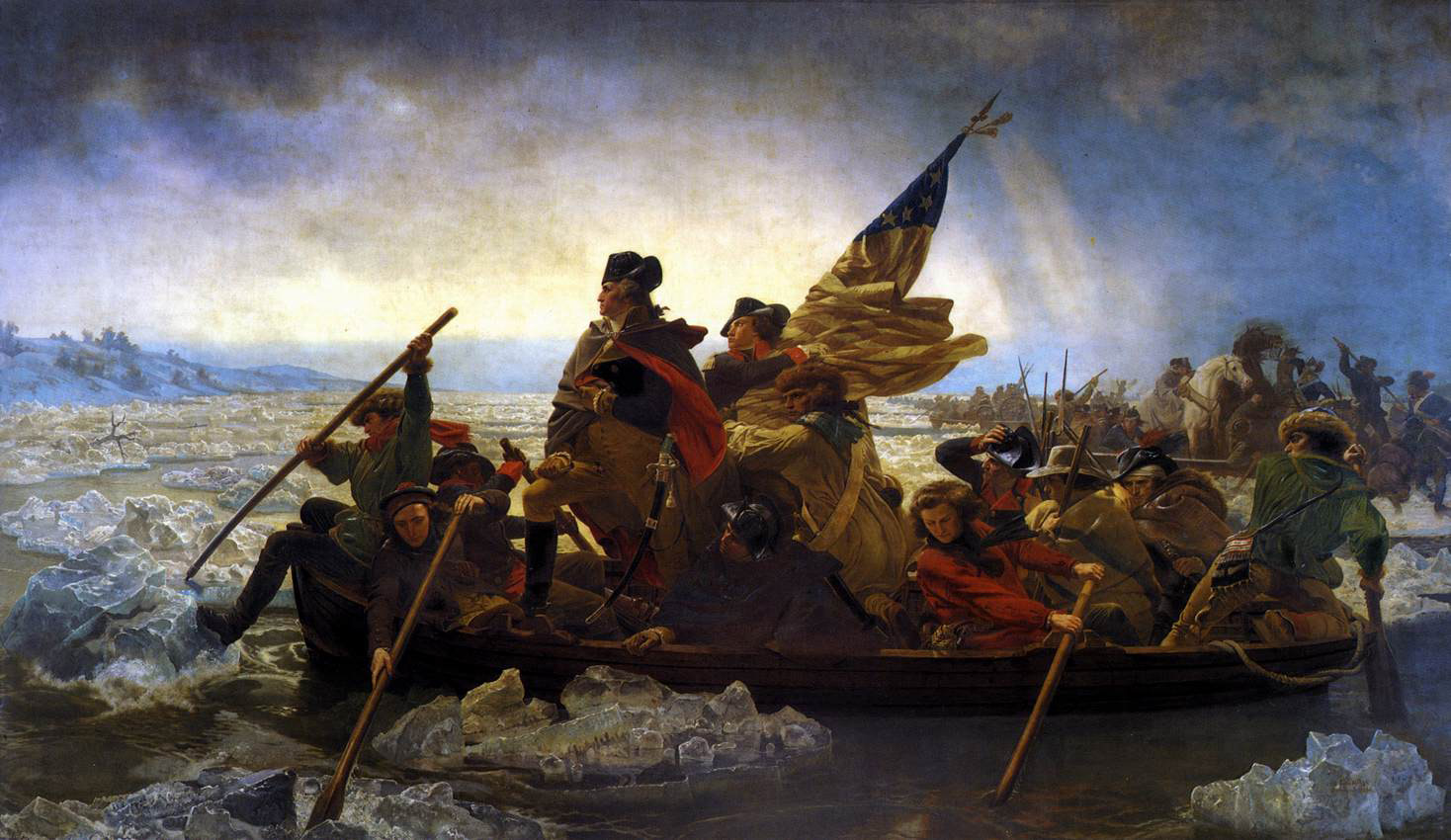
Thanksgiving Rediscovered: The Pilgrims’ Progress.
There is a significant difference between the popular image of Thanksgiving and the events that actually occurred in Plymouth, Massachusetts in 1620-1621. The conventional story of Thanksgiving tells of Pilgrims escaping from religious and political persecution in England to establish a regime of tolerance and freedom in the New World. Historians, however, tell a story that is more complex and not as congratulatory as the conventional version that appears in most school textbooks and the mass media. The Pilgrims were not always the saints they aspired to be. They were certainly not apostles of tolerance and freedom and were not missionaries for a democratic and multicultural America as they are often portrayed in popular culture.
Contrary to the conventional story, the Pilgrims did not come to America to establish religious freedom. The Pilgrims were strict English Protestants who opposed many of the practices of the established Anglican Church in England because Anglicanism seemed to them to be too much like the hated Catholic Church. As a result of their religious non-conformity, the Pilgrims were persecuted by the Anglican Church and English government. Many of the Pilgrims fled from England to the Netherlands in the early 1600’s to escape the oppression they suffered in England. But these same Pilgrims then fled from the Netherlands to America in 1620 to escape the religious tolerance and openness of Dutch society. It seems that the Pilgrim elders were afraid that their children might be induced by the religious and intellectual freedom of Dutch society to stray from the narrow and strict form of Protestant Christianity that the Pilgrims practiced. As such, the Pilgrims did not come to America to establish a society that promoted religious and cultural tolerance but to establish a regime of religious and cultural intolerance of their own.
In the course of their escape from freedom in the Netherlands, the Pilgrims lied to British authorities about where they were headed. They were supposed to land in Virginia but religion in Virginia was controlled by the Anglican Church. So, the Pilgrims essentially hijacked the Mayflower and landed in Massachusetts where they found that most of the natives had recently died from infectious diseases. Historians know now that this catastrophe was a result of the transmission to America by European fisherman and other visitors of diseases with which the Native Americans had no experience and no immune system defenses, so that most of them died. But the Pilgrims saw in this holocaust the hand of Divine Providence.
To their delight, the Pilgrims found empty houses in the vicinity of Plymouth Rock. They found crops growing in untended fields. They found graves full of useful items that had been buried with their owners. And they found abandoned land that was ostensibly open for appropriation by themselves. The Pilgrims survived their first few years in Massachusetts largely on the bounty that was left behind by dead Indians and on the advice of the few remaining natives. At what is considered the first Thanksgiving, the Pilgrims expressly gave thanks to God for having killed off the Indians and paved the way for the Pilgrims’ holy settlement. That was what they were rejoicing about with their feasts. And it was the surviving Indians who brought most of the food.
This is not a pretty picture of the Pilgrims and some people on the right-wing of the political spectrum claim that this is an unpatriotic portrait. But that is a false equation of patriotism with willful ignorance and blind obeisance to false gods. Patriotism is a commitment to making one’s country the best it can be, recognizing its shortcomings, and dealing with its problems openly and honestly. And that includes recognizing when the country’s founders and heroes are flawed.
A hero is worth celebrating for the ideals he/she represents to us and the challenges he/she presents to us in fulfilling those ideals. But a hero is also worth celebrating for the ways he/she fell short of those ideals, and is worth studying for the things we can learn from his/her failures to help us do better. The facts of Thanksgiving do not match the idealization of the Pilgrims to which we are accustomed. But that does not mean that the ideals we associate with Thanksgiving are not worth celebrating. The most important reason for celebrating a holiday is to recommit ourselves to fulfilling the ideals which the holiday commemorates.
Thanksgiving is a time to reflect on the whys and wherefores of whatever good fortune we have experienced over the past year and to share our good fortune with others. Thanksgiving also represents to us an ideal of religious freedom and intercultural cooperation that remains a challenge for us to fulfill. The Pilgrims did not entirely live up to these ideals but we can learn from their experience. The fact that the Pilgrims were flawed makes them worth studying to see whether and how their failures can help us to do better ourselves.
The Pilgrims are also worth celebrating because they exemplify many of the qualities we associate with Thanksgiving. They exhibited the courage of their convictions in leaving Europe for an unknown land. And when it turned out that the Mayflower carried as many non-Pilgrims as Pilgrims, the Pilgrims were able to work out a pragmatic compromise in the Mayflower Compact that satisfied the religious and political concerns of all parties. Over half of the Pilgrims died during their first winter in Massachusetts but the survivors persevered and gave thanks for their survival. The Pilgrims were also able to work peaceably with the Native Americans. It was the Puritans who came to Massachusetts later who enforced rigid and repressive religious requirements on the colonists, and who initiated major encroachments on the Indians’ lands and murderous wars with them.
So, there is much to be said in favor of the Pilgrims as precursors of American ideas and ideals. And there is reason to celebrate Thanksgiving as a day of taking stock of how those ideals have evolved, how our practices have and have not evolved to fit them, and how we can do better.
Revisiting Hanukkah: What to do with the Maccabees?
With Hanukkah there is an even greater difference than with Thanksgiving between the popular version and the historians’ version of the events behind the holiday. Hanukkah celebrates the war of a Jewish family, the Maccabees, and their followers against the Syrians who controlled Israel during the second century BCE. Hanukkah is historically a minor Jewish holiday and the Books of the Maccabees, which recount the events that Hanukkah commemorates from the point of view of the Maccabees, are not even part of the Jewish Bible. Hanukkah has, nonetheless, become a major holiday among modern America Jews.
The popular story of Hanukkah bears very little resemblance to the historical facts. As the story appears in Sunday school textbooks, the mass media, and the minds of most Jews, Hanukkah is an uplifting tale of heroic Jews fighting for religious freedom and national liberation against an oppressive and intolerant Syrian government. And in this version of the story, the Jews defeat the Syrians and live happily in freedom thereafter. This is the story that I learned in my Jewish Sunday school. The historical reality is quite different.
When Alexander the Great died in 323 BCE, his empire split into three often warring parts: the Ptolemaic Empire based in Egypt, the Seleucid Empire based in Syria, and the Antigonid Empire based in Greece. All three considered themselves Hellenistic societies and were ruled by Greeks and their descendants. Israel, as a crossroads between Africa, Asia and Europe, was a contested territory between the Egyptians and the Syrians. At the time of the Hanukkah events, which began around 167 BCE, Israel was controlled by Syria. The Syrians were tolerant and lenient overlords who largely left the Israeli Jews to themselves so long as they paid their annual tribute to the Seleucid king.
It is important to note that only a small minority of Jews lived at this time in Israel and that ever since the conquest of Israel by Babylonia in 586 BCE, the great majority of Jews had lived in communities scattered around the Mediterranean Sea and in the Middle East. It is also important to note that Israeli Jews and so-called diaspora Jews had different loci for practicing their shared religion. For most of those Jews who lived in Israel, the Temple — a place of animal and vegetable sacrifices to God — was the locus of worship. For the majority of Jews who lived outside of Israel, synagogues — places of study and prayer — were their locus of worship.
During the second century BCE, Israeli Jews were themselves split into feuding pro-Egyptian and pro-Syrian factions. Around 170 BCE, the pro-Syrian faction decided to cement the position of Israel within the Syrian Empire and gain some additional political rights and economic benefits for Israel by adopting some Hellenistic mercantile laws and promoting some Hellenistic cultural institutions, such as gymnasiums where scantily clad men and women would exercise.
These moves were mildly opposed by the pro-Egyptian faction but were violently opposed by a group of ultra-orthodox Jews who believed that these Hellenistic ways, and especially the gymnasiums, violated their strict interpretation of Jewish Biblical law. Led by the Maccabee family, they set out to kill any and all Jews who did not practice the strictly orthodox brand of Judaism that they practiced. The Hanukkah story thus began as a civil war of the ultra-orthodox Jews of that day against the reform Jews, with the ultra-orthodox conducting a campaign of terrorism and murder against the reformers. Rather than a struggle for religious and cultural freedom, it was an effort to impose an extremist form of religious and cultural totalitarianism on the Jewish people.
The Syrians, afraid that they might lose Israel to Egypt, stepped in to stop the violence but, as is often the case with imperial interventions, they only made things worse. As frequently happens when outsiders step into a civil war (see, for example, the American interventions into Iraq and Afghanistan), it is hard for the outsiders to distinguish among foes, friends, and neutrals among the local population, and heavy-handed measures are undertaken that hurt and alienate friends and neutrals. Frustrated by the situation, the Syrians undertook harsh measures against all Israeli Jews and against Israeli religious practices in the Temple in Jerusalem. As a result, the Maccabees were able to raise an army and the Hanukah wars dragged on for seven years from 167 to 160 BCE. Significantly, however, the Maccabees received no support from the majority of Jews who lived outside of Israel and who, apparently, could not identify with religious extremists who opposed not only the Syrians but reform Jews like themselves.
Hanukkah celebrates a victory of the Maccabees in a battle in 165 BCE as a result of which the Temple in Jerusalem was restored for Jewish worship. But that is not the end of the story. The Maccabees won many battles but did not win the war. The Syrians won the war and the surviving rebels had to retreat to the hills from which they periodically conducted terrorist raids on the Israeli population.
The Maccabees lost the war but won the peace, sort of. In the end, the last remaining rebel leader, Simon Maccabee, made a deal with the winning side in an internal Syrian factional fight. He was made the ruler of Israel so long as he went along with continued Syrian control and Hellenization of the country, the very things his family and followers had opposed. Simon became the first of the Hasmonean Dynasty of Jewish rulers over Israel, a regime so notoriously corrupt and vicious that they were able to maintain their rule only by repeatedly subjugating Israelis with the help of the Syrian army.
It is ironic and almost paradoxical that Hanukkah has become a major holiday for modern American Jews. Most Jews today are not orthodox and even the most orthodox Jews today are not anywhere near as orthodox, as devoted to following the letter of the Jewish Bible, as were the Maccabees. I don’t know, for example, of any Jews today who want to return to the animal and vegetable sacrifices in a Temple of those past days. And while the fanatics of some religions today believe in stoning to death adulterous women as is prescribed in the Bible, I don’t think that even the most orthodox Jews today believe in that. The irony is that probably all of the Jews who celebrate Hanukkah today would be considered heretical and unholy by the Maccabees.
This is not a pretty picture of the Maccabees and Hanukkah, and many Jews resist any critique of conventional renditions of Jewish history on the grounds that it is either a cover for anti-Semitism if done by a non-Jew or an instance of “self-hatred” if done by a Jew. But this is a confusion of critique with criticism and an over sensitivity to what these people see as criticism. As with patriotism, religious and ethnic loyalty must begin with a commitment to truth and honor. In this context, I cannot think of any way in which one could legitimately celebrate the Maccabees. They were heroic in fighting their wars but so are the Taliban and Islamic State fighters of today whom the Maccabees most resemble. One can be heroic without being a hero.
The holiday can perhaps best be celebrated as a warning against the extremism that imperialism can provoke. It also stands as a warning against outside interference in the internal conflicts of another country which can provoke extremism, as we have seen in recent years in Afghanistan and Iraq. In this way, the holiday can serve as celebration of freedom even if the subjects of the holiday, the Maccabees, are cited as a negative example.
Christmas: What would Jesus do?
Christmas is a different type of story than Thanksgiving and Hanukkah. With Christmas, there isn’t a contradiction between the popular version and the historians’ version of events but a contradiction between what most Christians believe actually and factually happened and the total absence of historical evidence about what happened or whether anything at all happened. The story of Jesus’ birth, and almost everything else about his life and death, is derived solely from the Gospels which are at best a third or fourth hand retelling of the supposed events. That Jesus was born in a manger attended by shepherds and by three wise men from afar who were guided by a star is contained only in the Gospels, and they were written generations after the events they report. There is no supporting historical evidence for the events described in the Gospels.
Christmas is one of the two most important holy days in the Christian calendar, the other being the Good Friday/Easter celebration of Jesus’ death and resurrection. These two holidays reflect one of the divisions among Christians between those who emphasize Jesus’ life and his role as a teacher appealing to humankind’s better angels, and those who emphasize his death and his role as a martyr dying as result of humankind’s wickedness. The former look to Jesus as an inspiration to help others, citing his Golden Rule as their credo “Do unto others as you would have them do unto you if you were in their situation.” The latter look for God’s help in identifying and punishing heretics, infidels and the wicked, those who ostensibly killed Christ and whose sins Christ died for. “Vengeance is mine saith the Lord” is their mantra.
Growing up as a Jew in a predominantly Catholic neighborhood in Chicago during the 1950’s, I experienced this latter attitude first hand. It was still Catholic Church doctrine at that time — it no longer is –that “the Jews” had killed Christ and that Jews’ continuing refusal to accept Jesus as their Savior constituted an ongoing crucifixion. My Catholic friends would tell me that their priest had told them at Good Friday services that “In every moment that a Jew refuses to accept Jesus as Savior, another nail is hammered into His quivering flesh.” It was dangerous for a Jewish kid to walk the streets in my neighborhood on Good Friday. I was once chased by a mob of several hundred boys who were just leaving Good Friday services at their parochial school church as I came by. I usually stayed indoors on Good Friday.
Although the Gospels provide support for both sides in this debate about the meaning of Jesus’ life and death, the Gospels seem to place Jesus within the camp of social idealists in Israel during his life. Israeli Jews at that time were split into two main groups. There were the Sadducees, a minority among Israeli Jews consisting mainly of the well-to-do, whose worship centered around sacrifices and rituals at the Temple, and the Pharisees, the majority of Israeli Jews whose religious practice centered around discussing moral questions, taking social action and worshiping at synagogues, much like Jews elsewhere in the world at that time.
Although the Gospels cite Jesus as criticizing Pharisees for being hypocritical and overly legalistic, he was apparently raised as a Pharisee and his teachings reflect those of idealists among the Pharisees, including the Golden Rule. Jesus’ main criticisms were leveled at Sadducees and the Gospels seem to blame some Sadducees, people connected with the Temple from which Jesus had driven moneylenders, for complaining about Jesus to the Roman authorities and conniving in his execution by the Romans. Jesus’ teachings as reported in the Gospels were almost entirely focused on social ideals.
Thanks in large part to Charles Dickens and his story A Christmas Carol, the celebration of Christmas over the last couple of hundred years in Europe and America has come to focus on social ideals. Dickens’ story mirrors in key ways the Gospel story of Jesus’ birth. The Gospels tell about a family sticking and working together through hard times and about charity from those who are well off to those who are less fortunate. Joseph and Mary are a poor working class family who have to find lodging in a barn. There they are helped by some local shepherds and by three rich kings who share their wealth with the poor family. Out of this comes the baby Jesus who symbolizes hope for a better self and a better world. A Christmas Carol is also a story of family togetherness and charity towards the less fortunate. In the story, the Cratchit family struggles economically, but they still make a merry Christmas together. Scrooge likewise eventually connects with his better angel and with his own family, and finds happiness and hopefully salvation through charity toward the Cratchits and the poor.
These social ideals have largely become the meaning of Christmas for most American and European Christians who are expected to examine their lives in light of the meaning of Christmas. This emphasis on Jesus as a teacher and social idealist inspired the Social Gospel movement among Christians in Europe and America beginning in the late-nineteenth century. They coined the question “What would Jesus do?” as a benchmark criteria for people’s actions. This question resonates with Christians and even many non-Christians to the present day. Pope Francis has recently even used his Christmas message to criticize the Catholic Church hierarchy for failing to live up to the Christian ideals that the Church is supposed to promote.
For many Christians, the historicity of Jesus’ life, and whether events actually occurred as they are described in the Gospels, seems to make very little difference to their beliefs. The Christmas story for them is almost entirely a vehicle for Christian ideals. Unlike the historical reexaminations of the events behind Thanksgiving and Hanukah which have highlighted flaws and failings in the Pilgrims and Maccabees, there has been no historical debunking of Jesus’ ideas and actions. There has, however, been controversy among Christians as to whether Jesus was perfect in every way. Some claim that to suggest otherwise is blasphemous. Others claim that in his human aspect, Jesus had at least potential failings.
They cite the temptation of Jesus by Satan in the Dessert as showing that he was capable of being tempted even though he rejected the temptations. And they cite his cry of despair while dying on the Cross, “My God, my God, why hast thou forsaken me?,” as showing that he was capable of doubting his faith even though he subsequently reaffirmed it before dying. They claim that in these incidents Jesus confirms the Christian message that there is no virtue without the possibility of vice so that virtue consists of overcoming vice, and that there is no faith without doubt so that faith consists of overcoming doubt. Christians, they say, must expect to be tempted and to experience doubt. There is no sin in that. The goal is to overcome them.
Celebrating and Learning from History as Choice.
The Pilgrims were not liberals or democrats. They were not even Americans as we usually define that term. They were precursors of Americans in the way that the Mycenaeans were the precursors of the Greeks or the Angles and Saxons were precursors of the English. Likewise, the Maccabees were not freedom fighters and they were not even Jews in the way Judaism has been practiced over the last two thousand years. They were precursors of that Judaism. And Jesus was not a Christian. He was a Jew with a message that became the basis of Christianity and, as such, he can be considered a precursor of Christianity.
These people are worth celebrating for the ideals they represent. But even more, they are worth studying for the problems they faced, the alternatives they chose from in trying to solve their problems, and the choices they made. Their choices produced consequences that are contained in our problems, our alternatives, and our choices as we try to fulfill the ideals they represent. That is why holiday celebration should involve critical reasoning at least as much as emotional rejoicing. If we wake up the next morning with a headache, it should be from too much thinking about holiday issues and debating them with our relatives and friends, and not just from too much holiday spirits.
 historyaschoice